
Heat is one of the fundamental physical quantities that plays a key role in many areas of life - from everyday activities such as cooking to state-of-the-art industrial technologies. Understanding what conducts heat better - aluminum or copper- is not only a theoretical question, but also a practical one, with applications in many fields of engineering and science. In this article, we will discuss in detail the thermal conductivity properties of these two commonly used metals and their applications in various industries.
Thermal conductivity is the ability of a material to conduct heat. It is one of the most important properties of materials that determines their usefulness in many technical applications. What conducts heat better, aluminum or copper, depends on their unique physical and chemical properties.
Thermal conductivity (κ) is a measure of how effectively a material can conduct heat. It is usually expressed in watts per meter per kelvin (W/m-K). In practice, it means the amount of heat that flows through a unit area of a material per unit time at a temperature difference of one kelvin.
The value of thermal conductivity is crucial in many fields, including construction, electronics, mechanical engineering and energy. High thermal conductivity means that the material conducts heat quickly, which is crucial in applications that require efficient heat dissipation, such as computer heat sinks and heating elements.
Thermal conductivity affects the energy efficiency and safety of many technical systems. For example, in electronics, the high thermal conductivity of heat sink materials is key to preventing components from overheating. In construction, insulating materials with low thermal conductivity are used to improve the energy efficiency of buildings.
Aluminum is one of the most widely used metals in the world. It is known for its light weight and corrosion resistance, making it an ideal material for many engineering applications.
Aluminum is a metal with a density of just 2.7 g/cm³, making it one of the lightest metals used in industry. It is a silver-white metal with a high thermal conductivity of about 235 W/m-K. It is also an excellent conductor of electricity.
Chemically, aluminum is very reactive, but under normal conditions it is coated with a thin layer of oxide (Al₂O₃) that protects it from further corrosion. This property makes it particularly valuable in applications exposed to the elements, such as building structures and vehicle components.
Aluminum is used in a wide range of industries, including aerospace, automotive, construction, and packaging and electronics. Its light weight and corrosion resistance make it an ideal material for aircraft, car and ship components.
In addition, aluminum is used in the manufacture of various types of heat sinks and heat exchangers, where its high thermal conductivity allows efficient heat dissipation. It is also widely used in the manufacture of cans, films and other packaging, thanks to its softness and ease of forming.
Copper is the second of the metals we compare in terms of thermal conductivity. It is a heavier metal than aluminum, but is equally widely used in various industries.
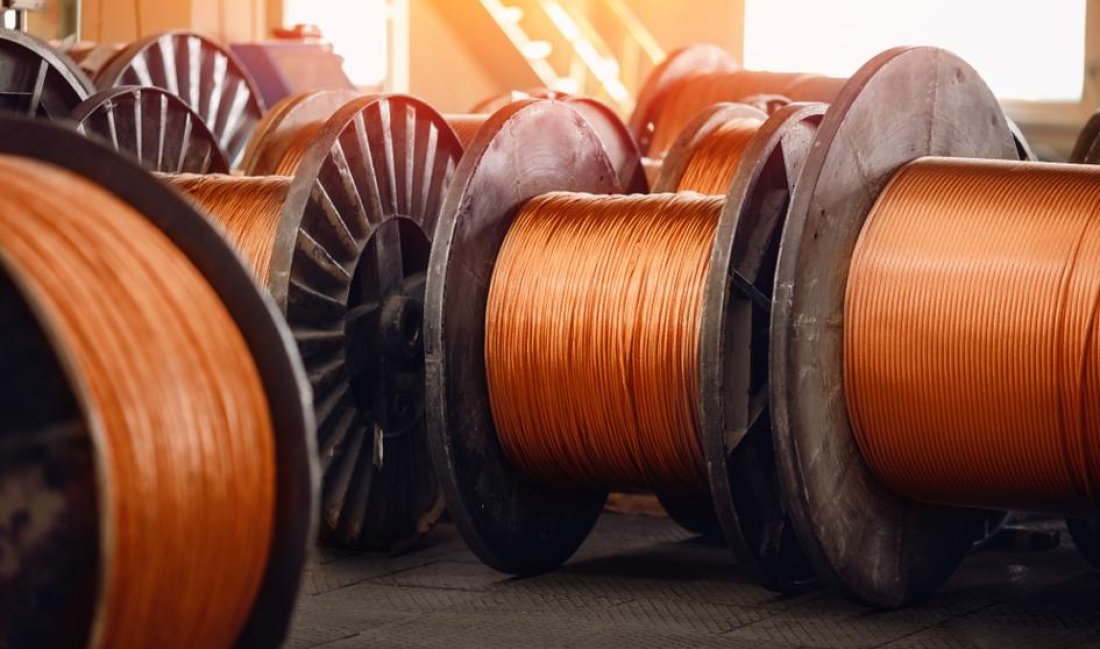
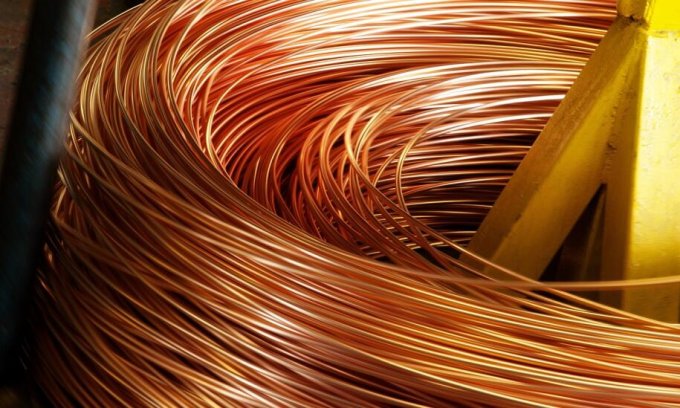
Copper is a metal with a density of about 8.96 g/cm³, making it much heavier than aluminum. It has a distinctive reddish-brown color and a very high thermal conductivity of about 401 W/m-K. It is also one of the best conductors of electricity, right after silver.
Copper, like aluminum, is susceptible to oxidation, but it forms a patina (a layer of copper oxide) that protects it from further corrosion. It is a highly malleable metal, meaning it can be easily molded into various shapes, which is particularly important in many industrial applications.
Copper is widely used in the electrical and electronics industries due to its high electrical conductivity. It is present in cables, wires, electric motors, transformers and many other devices.
In terms of thermal conductivity, copper is used in the manufacture of heat sinks, heat exchangers and thermal components such as heat pipes. It is also widely used in water and heating systems, particularly in homes, as a pipe material.
Already knowing the physical and chemical properties of the two metals, we can directly compare their ability to conduct heat.
Aluminum and copper differ significantly in terms of thermal conductivity. The thermal conductivity of copper is about 401 W/m-K, making it one of the best heat conductors in the world. In comparison, the thermal conductivity of aluminum is about 235 W/m-K.
This comparison shows that copper conducts heat much better than aluminum. This is particularly important in applications where fast and efficient heat dissipation is crucial, as in the case of heat sinks for advanced electronics.
Although copper has a higher thermal conductivity, aluminum is not worthless. Aluminum is lighter, cheaper and more corrosion resistant, making it preferable in many applications where weight and cost are key and thermal conductivity need not be the highest. For example, aluminum is often used in aircraft or vehicle construction to reduce weight.
Copper, on the other hand, will find use where thermal conductivity is absolutely crucial. Heat sinks of top-shelf computers, cooling systems in power plants or specialized heating equipment often use copper, despite its higher price and weight.
The thermal conductivity of metals depends not only on their chemical composition, but also on the temperature at which they are used.
The thermal conductivity of metals changes with temperature, which can affect their actual use. In aluminum, the thermal conductivity decreases as the temperature increases. This means that at very high temperatures, aluminum may not be as efficient a heat conductor as at room temperatures.
Copper, on the other hand, exhibits more stable thermal conductivity over a wide temperature range. This means that even under extreme conditions, copper still conducts heat at very high levels. This makes it an ideal choice for industrial applications where temperatures can rise significantly.
Because of differences in thermal conductivity and how it changes with temperature, engineers must carefully select materials for specific applications. For example, an aluminum heat sink may be sufficient for home electronics use, but industrial systems that require dissipating large amounts of heat will prefer copper.
In addition to physical properties, cost and availability of materials also play a significant role in their selection for specific applications.
Aluminum is significantly cheaper than copper. This is one of the reasons why it is so widely used in industry, even though its thermal conductivity is lower. Currently, the price of aluminum is about $2.5 to $3 per kilogram, while the price of copper fluctuates between $6 and $7 per kilogram.
The cost of producing and processing aluminum is also lower due to its lower density and ease of forming. As a result, aluminum products are often more economical, which is key in industries where material costs are a large part of the overall budget.
Both aluminum and copper are available globally, but their supply and availability can vary by region. Aluminum is the fourth most abundant element in the Earth's crust and is obtained mainly from bauxite. Copper, although somewhat rarer, is also readily available thanks to the large reserves of copper ore deposits around the world.
In Poland, both aluminum and copper are widely available, although the country is not a major producer of these raw materials. Therefore, transportation costs and customs duties can affect the final prices of these materials on the domestic market.
Knowing all the above properties and economic aspects, an informed choice can be made between aluminum and copper depending on the specific application.
In electronics, where efficient cooling is crucial, copper is often the preferred material due to its high thermal conductivity. Copper heat sinks are used in the most advanced computer cooling systems, where excess heat can lead to equipment failure.
In aviation and automotive, on the other hand, where weight is critical, aluminum is often the choice. It is a good enough conductor of heat, and its low weight greatly improves fuel efficiency and overall machine performance.
In heating and cooling systems, the efficiency of heat conduction is crucial. Therefore, copper, with its higher thermal conductivity and resistance to high temperatures, is often the preferred material for pipes and heat exchangers.
Which conducts heat better - aluminum or copper? The answer depends on the specific application. Copper, with its higher thermal conductivity, is the best choice for applications requiring fast and efficient heat dissipation. Aluminum, on the other hand, with its light weight, lower cost and good thermal conductivity, is an excellent material in numerous industries where these factors are crucial.
By making an informed choice, engineers and designers can optimize the performance of their designs and systems, taking into account both the physical properties of the materials as well as cost and availability. All of this underscores the importance of carefully analyzing the specifics of each project and optimizing in the context of actual needs and constraints.