
Known for its lightness, rust resistance and versatility, aluminum is one of the most widely used metals in the world. Our homes, cars, airplanes and power plants contain aluminum. But, like any other material, aluminum is not indestructible. What does aluminum corrode from? This is a question that scientists and engineers alike are asking. In our article we will discover the secrets of aluminum corrosion, its causes, mechanisms and ways to prevent this phenomenon. We will focus primarily on the situation in Poland, taking into account local climatic, industrial and environmental conditions.
Aluminum is a metal whose surface, when exposed to air, undergoes natural passivation. This means that a thin layer of aluminum oxide forms on it, which protects the deeper layers of the metal from further reaction with oxygen or other substances. This is one of the unique characteristics of aluminum, giving it exceptional corrosion resistance. The layer is extremely thin, measuring only a few nanometers, but it is also very dense and insoluble, meaning that it effectively protects the metal.
It is worth noting that the aluminum oxide layer is self-repairing. This means that if the layer is scratched or damaged, then it immediately recovers, providing further protection for the metal. This self-repairing ability is one of the main reasons why aluminum is so popular in the construction and transportation industries.
However, this natural protective barrier has its limits. The environmental conditions in which aluminum is found can affect its effectiveness. What does aluminum corrode from? Acid rain, high salinity, air pollution, as well as other factors can contribute to damage and degradation of the oxide layer, which in turn leads to corrosion of the aluminum itself.
For example, in Poland, especially in industrial regions, high concentrations of air pollution can significantly accelerate the corrosion process. In addition, coastal areas such as the Tri-City, where the air contains a high concentration of salt, are more prone to aluminum corrosion. We will discuss these aspects in more detail later in the article.
Acid rain is one of the most destructive phenomena affecting aluminum corrosion. Acid rain is caused by air pollution from sulfur oxides (SOx) and nitrogen oxides (NOx), which react with water in the atmosphere to form sulfuric and nitric acids. These acids, falling to the ground as rain, can damage the protective layer of aluminum oxide, making the metal more susceptible to further corrosion.
Corrosion caused by acid rain is particularly problematic in industrial areas of Poland, such as Upper Silesia. The concentration of these chemicals in the atmosphere there is much higher than the national average, which means that aluminum in these regions is more vulnerable to degradation. Owners of buildings and infrastructure in regions affected by acid rain must be especially vigilant and regularly check the condition of their aluminum structures.
Acid rain can also affect the corrosion of aluminum in indirect ways. For example, they can wash other contaminants from the air and soil onto the surface of aluminum, further weakening its protective oxide layer.
Salinity is another factor that has a major impact on aluminum corrosion. High salt concentrations in the air or water can lead to the formation of chlorides on the aluminum surface. These chlorides break the protective barrier of the oxides, leading to corrosion. This phenomenon is particularly common in coastal regions of Poland, such as the Hel Peninsula and the Baltic Coast.
It is worth mentioning that salinity is not only a problem in the context of natural coastal environments. In Poland, salt is used extensively for winter road maintenance. Winter weather conditions and the use of road salt can lead to rapid deterioration of aluminum car components and road infrastructure.
Industrial pollution is another important factor that affects the corrosion of aluminum. In Poland, especially in highly industrialized areas such as Lower Silesia and Silesia, industrial pollution can significantly accelerate the corrosion of aluminum. Emissions from industrial plants contain various chemicals that can react with aluminum oxide, damaging the protective layer.
Substances such as chlorine, sulfur and nitrogen are emitted in the form of gases and can settle on the surface of aluminum, leading to its degradation. Therefore, in such regions, it is recommended to use additional protective measures, such as special anti-corrosion coatings, which can significantly extend the life of aluminum components.
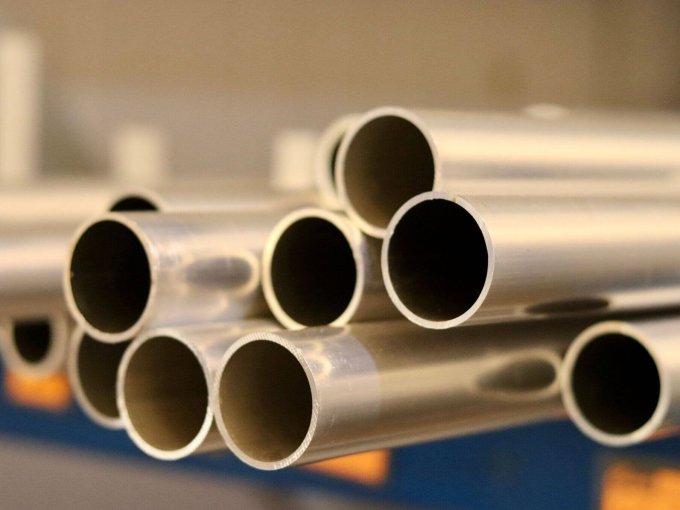
The corrosion of aluminum, like the corrosion of other metals, is an electrochemical phenomenon. It involves the reaction of a metal with its environment, as a result of which the metal goes into solution in the form of ions, and corrosion products are formed on its surface. One of the most important mechanisms of aluminum corrosion is galvanic corrosion, which occurs when aluminum is in contact with another metal and both are immersed in an electrolyte.
Galvanic corrosion occurs when two metals with different electrochemical potentials are in contact and are in a conductive environment, such as salt water or acidic water. Aluminum, being a metal more susceptible to oxidation than stainless steel or copper, becomes the anode in this reaction, leading to its faster corrosion.
Crevice corrosion is another important mechanism to be aware of. It occurs where aluminum is coated tightly with another material, creating narrow, hard-to-reach spaces. In such places, there can be a local increase in the acidity of the environment, which accelerates corrosion. This type of corrosion can be prevented by proper structural design and the use of sealants.
Pitting corrosion, also known as point corrosion, occurs on small, local areas of the metal surface. It usually arises as a result of local damage to the oxide layer. Pitting can penetrate deep into the structure of the metal, making it particularly dangerous. Prevention of this form of corrosion involves regular inspections and the use of corrosion inhibitors.
Intergranular corrosion is another form of corrosion experienced by aluminum. It involves attacking the boundaries of metallic grains, leading to a weakening of the metal's structure. This is a very dangerous form of corrosion, as it can occur suddenly and lead to serious mechanical damage.
This type of corrosion can be prevented by appropriate heat treatment processes and the use of aluminum alloys resistant to intergranular corrosion. In Poland, advanced technologies are being implemented in the aerospace and automotive industries to eliminate the risk of this type of corrosion.
One of the most effective ways to protect aluminum from corrosion is the use of protective coatings. Various types of coatings are available on the market, ranging from paint to anodizing, which increase aluminum's resistance to corrosion. Anodizing is an electrochemical process that increases the thickness of the natural oxide layer on the aluminum surface, making it even more resistant to mechanical and chemical damage.
In Poland, anodizing is widely used in the construction and automotive industries. The process not only increases corrosion resistance, but also offers the possibility of obtaining aesthetic, colorful surface finishes, which is an added advantage for architects and designers.
Corrosion inhibitors are chemicals that can be added to the environment in which aluminum is found to prevent or slow down corrosion processes. These compounds work by inhibiting the electrochemical reactions that lead to corrosion. In Poland, these inhibitors are mainly used in the water and heating industries, where they are used to protect pipelines and other aluminum infrastructure components.
One of the most obvious but often overlooked ways to protect aluminum from corrosion is to control environmental conditions. Maintaining proper levels of humidity, salinity and air cleanliness can significantly reduce the risk of corrosion. In regions of Poland where these conditions can be difficult to control, such as coastal or industrial regions, proper ventilation and air filtration systems can significantly improve the protection of aluminum structures.
The number one rule for protecting aluminum from corrosion is regular inspection and maintenance. Without even basic inspections and repairs, even the best protective coatings and inhibitors can fall short. In Poland, particularly in the aerospace and construction industries, rigorous inspection programs are in place for early detection and repair of corrosion damage.
Interviews with experts from various fields show that aluminum corrosion is a complex problem that requires a multidisciplinary approach. Professor Jan Kowalski of the Warsaw University of Technology notes,"What does aluminum corrode from? It's not just a question of chemistry, but also of materials physics and environmental engineering. The key is to understand how different factors affect corrosion and how they can be controlled."
Engineer Michal Nowak, who designs aluminum bridges, adds, "In Poland, especially in industrial environments, we need innovative solutions and continuous monitoring. Corrosion is not something that can be ignored - its effects are far-reaching."
Dr. Maria Wisniewska, an expert in materials chemistry, emphasizes: "The biggest challenge is to properly understand local environmental conditions. Aluminum protection must be tailored to the specific needs of the region. With proper protective measures and regular maintenance, aluminum can last for decades."
Aluminum corrosion has significant implications for the construction industry. Aluminum structural components are commonly used in modern buildings because of their light weight and aesthetics. However, corrosion can lead to deterioration of the appearance and structural integrity of these materials.
The problem of aluminum corrosion varies in Poland, where environmental conditions can range from the humid regions of Masuria to the dry areas of Greater Poland. In coastal regions, aluminum structures must be particularly well protected from salinity. In industrial areas such as Katowice, on the other hand, protection from air pollution is crucial.
Aluminum also plays a key role in the automotive industry. Many modern cars have aluminum bodies, which are lighter and more energy-efficient than traditional steel ones. However, corrosion can significantly affect the durability and safety of vehicles.
In Poland, especially in winter, the use of salt to clear snow from roads is common, and this can lead to accelerated corrosion of aluminum car parts. Therefore, automakers are using various protective coating technologies and washing and maintenance systems to minimize this problem.
In the aerospace industry, where aluminum is commonly used because of its lightweight nature, corrosion is a serious safety hazard. Aluminum, which is used in aircraft structures, must be carefully monitored and maintained.
Airports in Poland, such as Warsaw's Chopin Airport, must adhere to strict maintenance and inspection standards. Any form of corrosion is immediately identified and removed to ensure the safety of flight operations.
Aluminum corrosion is a complex problem that requires a comprehensive approach. The metal's natural properties allow for passivation, but a variety of factors, including acid rain, salinity and industrial pollution, can exceed the protective capabilities of the oxide layer. Knowledge of corrosion mechanisms, such as electrochemical processes, crevice corrosion, pitting and intergranular corrosion, is crucial for developing effective prevention strategies. In Poland, due to local climatic and environmental conditions, the use of protective coatings, corrosion inhibitors and regular inspection and maintenance are essential. Conversations with experts underscore the importance of an interdisciplinary approach to the issue. In various sectors of the economy, from construction to automotive to aviation, aluminum corrosion remains a significant challenge that requires constant attention and innovative solutions.