Aluminum, due to its unique properties, is one of the most widely used metals in industry. Lightweight, strong and corrosion-resistant, aluminum has found applications in many fields - from automotive to aerospace, construction and electronics. However, in order to realize its full potential, heat treatment is necessary. What is heat treatment of aluminum alloys? This question will be the theme of our article, in which we will discuss the various methods and techniques used in this field.
Our goal is to provide readers with information on the processes that help improve the mechanical properties of aluminum. We will present the various stages of heat treatment, from annealing to aging, and examine how these processes affect the structure and properties of the material. We will also look at industrial and technological applications that benefit from the use of aluminum.
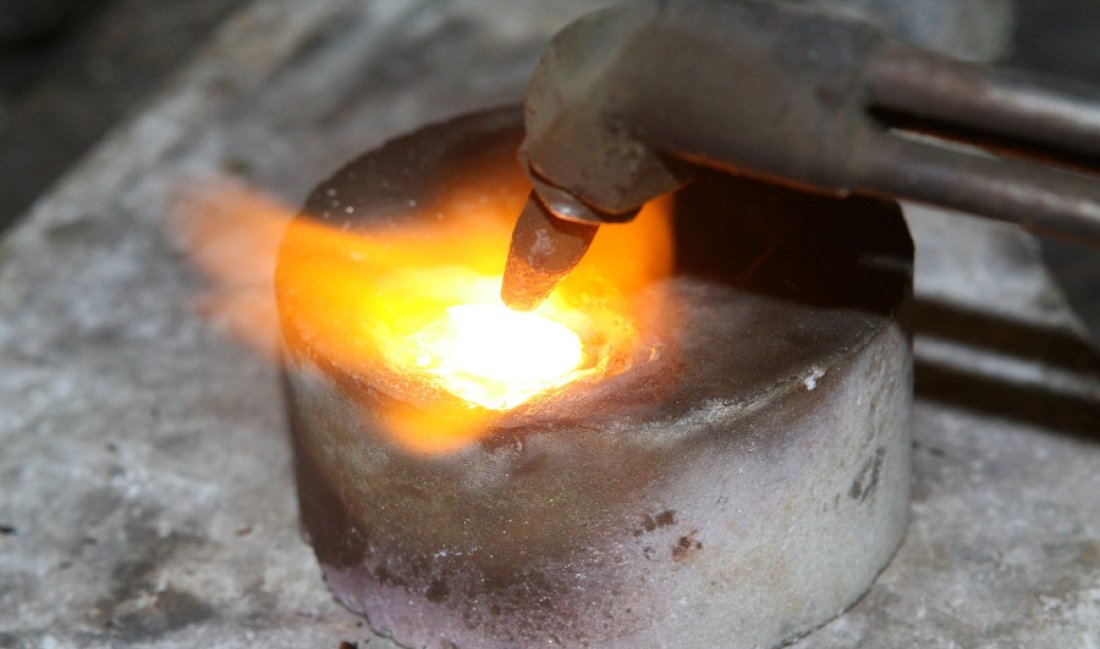
What does heat treatment of aluminum alloys involve? One of the key processes is annealing, which involves heating the metal to an appropriate temperature and then slowly cooling it. The goal is to soften the material and improve its mechanical properties. Annealing is widely used in the production of aluminum alloys to give them the required service properties.
The annealing process can be divided into three main stages: heating, holding at a certain temperature and slow cooling. It is important to carry out the process under appropriate conditions and control the temperature to achieve the desired results. For example, annealing at a temperature below the melting point removes internal stresses and microstructure defects, which increases the ductility and strength of the material.
During annealing, the microstructure of the alloy is reconstructed, which is essential for further processing steps. High annealing temperatures allow changes in the distribution of atoms and the formation of new crystalline structures. Proper control of this process makes it possible to obtain the desired mechanical properties, such as hardness, tensile strength and flexibility.
Hardening of aluminum is another important process that significantly affects the properties of the material. What is heat treatment of aluminum alloys in the context of hardening? Quenching is a process that involves heating the alloy to a high temperature and then rapidly cooling it in water, oil or air. The rapid cooling means that the metal atoms do not have time to move to their natural positions, leading to the formation of a more compact and harder structure.
In the case of aluminum, quenching is often used in conjunction with other heat treatment processes, such as aging or supersaturation. These additional steps allow the hardening effect to be enhanced and better mechanical properties to be obtained. For example, hardening combined with supersaturation can lead to an increase in tensile strength by up to several tens of percent.
Controlling the temperature and duration of the quenching process is key to achieving the desired results. Too low a temperature or too short a cooling time can lead to incomplete hardening, which consequently weakens the material. On the other hand, too high a temperature or too rapid cooling can lead to cracking or deformation of the alloy. Therefore, the hardening process requires precise monitoring and control.
Supersaturation and aging are two other heat treatment processes that play a key role in improving the mechanical properties of aluminum. What is heat treatment of aluminum alloys in the context of supersaturation? Supersaturation is the process of heating the alloy to a high temperature to dissolve the alloying constituents and then rapidly cooling it to retain these constituents in solid solution. Supersaturation is followed by aging, which involves annealing the alloy at a lower temperature for a specified period of time to allow the secondary phase particles to precipitate out and harden the material.
Supersaturation is a key step that prepares the alloy for further aging. This process produces a homogeneous structure that is more amenable to further strengthening through aging. Supersaturation is particularly important for aluminum alloys containing copper, magnesium, silicon and zinc, which require high temperatures to fully dissolve the components.
Aging, on the other hand, is a process of controlled annealing of the alloy at a specific temperature, usually below the melting point. During aging, secondary phase particles precipitate out, leading to an increase in the material's strength and hardness. The aging process can be divided into two types: natural and artificial. Natural aging takes place at room temperature for a longer period, while artificial aging involves annealing the alloy at a higher temperature for a shorter period of time.
Determining what heat treatment of aluminum alloys entails requires an understanding of how these processes affect the metal's internal structures. Each heat treatment step leads to changes in the microstructure of aluminum, which directly affects its mechanical properties. For example, annealing causes the metal's atoms to move to remove structural defects such as dislocations and microcracks. The result is a material with greater ductility and tensile strength.
Hardening, on the other hand, leads to the formation of a more compact and harder structure, which is the result of rapid cooling of the metal from high temperatures. This process means that the metal atoms do not have time to move to their natural positions, leading to the formation of a structure that is naive but strong. Supersaturation and aging further strengthen this structure, leading to the precipitation of secondary phase particles that increase the material's strength and hardness.
Changes in the internal structure are crucial to the performance of aluminum. For example, a more compact and harder structure is more resistant to abrasion and corrosion, which is particularly important in industrial applications. On the other hand, a more ductile and tensile structure is more amenable to forming and machining, which is important in the production of products with complex shapes.
Heat treatment of aluminum plays a key role in many industrial applications. What is heat treatment of aluminum alloys in the context of industrial applications? The mechanical properties obtained through heat treatment make aluminum an ideal material for automotive, aerospace, construction and electronic parts. For example, annealing allows for increased ductility and tensile strength, which is particularly important in the production of automotive bodies and aerospace components.
Hardening, on the other hand, leads to the formation of a more compact and harder structure, which is crucial for machine parts that must withstand heavy loads and abrasion. Over-saturation and aging further increase strength and hardness, making aluminum an ideal material for structural components in the construction industry. High corrosion and abrasion resistance also makes aluminum widely used in the manufacture of tools and sports equipment.
Heat treatment of aluminum is also important in electronics, where thermal and electrical conductivity properties are crucial. Aluminum subjected to appropriate heat treatment processes exhibits excellent conductive properties, which is important in the manufacture of heat sinks, electrical wiring and electronic components. Its high ductility and formability also make aluminum a popular material in the manufacture of housings and chassis for electronic devices.
In summary, what does heat treatment of aluminum alloys involve? The process involves various stages, such as annealing, quenching, supersaturation and aging, which are designed to improve the mechanical properties of the material. Each stage leads to changes in the microstructure of aluminum, which directly affects its strength, hardness, ductility and corrosion resistance.
Heat treatment of aluminum plays a key role in many industrial applications, from automotive to aerospace, construction and electronics. When carried out properly, these processes produce a material with excellent performance properties that is not only lightweight and strong, but also resistant to corrosion and abrasion.
We hope that this article has provided you with comprehensive and useful information on aluminum heat treatment and its application in industry. Thank you for your attention and we invite you to continue exploring the fascinating world of metals and their processing!