
Aluminum is a metal that has found a wide range of applications in various industrial fields. Its unique properties, such as lightness, durability and corrosion resistance, have contributed to its popularity. However, one of the most important questions that often arouses curiosity is: at what temperature does aluminum melt? In this article we will look at this question in detail, discussing not only the melting point of aluminum, but also the applications of this metal, its properties and the technological aspects of its processing. By reading this article, you will learn everything there is to know about the melting point of aluminum and its various contexts of use.
Aluminum has many properties that make it one of the most important metals in industry. It is a lightweight metal with high strength, which means it is ideal for applications that require high strength at low weight. Aluminum is also highly ductile, making it easy to mold into various shapes.
One of the key aspects that affects the properties of aluminum is its crystal structure. Aluminum crystallizes in a regular arrangement, meaning that its molecules are arranged in a symmetrical and orderly manner. This characteristic affects its mechanical properties, including its melting point.
Aluminum is known for its exceptional corrosion resistance, which is one of the reasons why it is so often used in the aerospace and construction industries. The oxide layer that naturally forms on the surface of aluminum protects it from further weathering.
Aluminum has high thermal conductivity, which means it is an excellent material for storing and conducting heat. This is why it is used in heat exchangers and car radiators.
Compared to other metals, aluminum melts at a relatively low temperature of about 660.32°C (933.47 K, 1220.58°F). This low melting point is one of the reasons why aluminum is often used in various technological processes, such as casting and welding.
Aluminum has a high coefficient of thermal expansion, which means that its volume changes significantly under the influence of temperature. This property must be taken into account especially in the context of construction, where it is important to prevent deformations resulting from thermal stresses.
When observing the behavior of aluminum under the influence of temperature, its phase transformations play a key role. At about 660°C, aluminum goes from a solid to a liquid phase. This specific melting point is extremely important in the metalworking industry, where precise control of the melting process is crucial.
When exposed to high temperatures, the strength of aluminum can decrease significantly, while its ductility increases. Therefore, processes such as hot plastic deformation are possible precisely because of this property. In the heat treatment process, aluminum can be shaped and formed into complex structures without losing its mechanical properties.
Metallurgy is the branch of science that deals with the processes of mining, processing and working of metals. In the context of aluminum, metallurgy is particularly important because of the uniqueness of the processes of extracting this metal from bauxite ore and refining it into pure aluminum. The melting process is one of the key steps in aluminum metallurgy, and the melting point of aluminum plays a central role in it.
Aluminum is one of the key materials used in the aerospace industry. Due to its lightness and strength, aluminum allows aircraft and rockets to be significantly lighter, which is crucial to their efficiency and economy. Fuselage structure, structural components, and engine components are often made specifically from aluminum.
In the automotive industry, aluminum is used for components such as bodies, rims, bumpers and drivetrain components. Its high thermal conductivity also makes aluminum an ideal material for cooling components such as radiators. By using aluminum, cars can be lighter, more efficient and use less fuel.
In construction, aluminum is increasingly being used as a structural material. Aluminum profiles are used for window frames, doors, as well as facade and roof structures. Resistance to corrosion and ease of processing make aluminum an ideal material for outdoor applications.
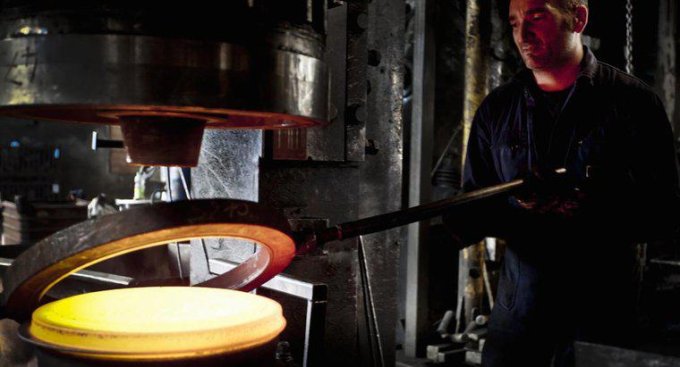
The casting of aluminum is one of the oldest and most important processes in its processing. The process involves heating aluminum to its melting point and then pouring it into a mold, where the metal solidifies, taking the shape of the mold. Casting allows the production of complex shapes and structures that would be difficult to achieve by other methods.
Welding aluminum is a process that requires specialized techniques and appropriate equipment. Aluminum tends to form an oxide protective layer, which makes the welding process difficult. That's why methods such as MIG (fluxed electrode welding) and TIG (non-fusible electrode welding) are used to weld aluminum to produce clean and durable joints.
Heat treatment processes such as annealing and hardening are also important in the context of aluminum. Annealing involves heating aluminum to a certain temperature, holding it at that temperature for a period of time, and then slowly cooling it down. This process allows the material to soften and improve its ductility. Quenching, on the other hand, involves rapid cooling after heating to a high temperature, which increases the strength of aluminum.
Aluminum is widely used in photovoltaic technology. The metal's lightness and strength make it an ideal material for solar panel frames. Aluminum frames are resistant to corrosion, which ensures the longevity and efficiency of solar panels even in harsh weather conditions.
In the case of wind turbines, aluminum is used to manufacture a variety of components, such as blades and towers. The high strength and lightness of aluminum make components made from this material more efficient and durable. Such turbines can withstand extreme weather conditions while being extremely efficient sources of renewable energy.
Aluminum is also used to manufacture various types of batteries and other energy storage devices. Aluminum battery cells are lightweight and have a high energy capacity, making them an ideal choice for portable power applications, as well as for large energy storage systems used in power grids.
One direction of technical development in the context of aluminum is new metal alloys that combine various properties, such as lightness, strength, corrosion resistance and thermal performance. Engineers and scientists are working to develop alloys that will be even more efficient and versatile, enabling aluminum to be used in even more fields.
Aluminum recycling is one of the most efficient processes in the metal industry. Aluminum can be recycled many times without losing its properties, making it an extremely valuable resource from an environmental perspective. The aluminum recycling process requires significantly less energy compared to the production of new metal, which contributes to reducing CO2 emissions and lowering the carbon footprint.
New technologies, such as 3D printing of aluminum, offer opportunities previously unknown in the context of manufacturing complex and precise components. 3D printing saves material and reduces manufacturing waste, which is particularly important in the context of sustainability.
In the article, we discussed at what temperature aluminum melts, noting its properties, applications and processing technologies. Aluminum melts at about 660.32°C, making it a versatile and extremely useful material in a variety of industries. Its low melting point, high thermal conductivity and exceptional lightness make it one of the most important metals in the world today. It is worth appreciating the importance of aluminum and its role in industry, and considering the future of this remarkable metal in the context of technological innovation and sustainable development.
Understanding at what temperature aluminum melts is crucial for various technological and industrial fields. This knowledge allows the efficient use of aluminum in production processes, which contributes to more advanced technologies and sustainable solutions in various industries. Aluminum, thanks to its unique properties, remains one of the most important and valued metals in the modern world, and its use will continue to grow as technology advances.