
Metal forming is one of the most important processes in the metal industry, which plays a key role in shaping, forming and manufacturing a variety of metal products. With this technology, it is possible to obtain products with high precision, functionality and aesthetics. This article aims to provide detailed information on what metal forming is, its various types and applications, and discuss the technologies used in the process. We will also try to give readers an idea of how this sector is developing in Poland and what its future prospects are.
Metal forming is a technological process by which metals are subjected to changes in shape and dimensions under the influence of external forces. This process can be carried out cold, hot or warm, depending on the working temperature and the properties of the material being processed. Through mechanisms such as bending, rolling, stamping, forging or drawing, it is possible to transform raw metals into more complex and functional components.
A variety of materials can be used in metal forming, among which the most common are:
Rolling is one of the oldest and most common methods of metal forming. The process involves passing metal between two rotating rollers, resulting in a reduction in thickness and a change in shape.
Cold rolling is carried out at ambient temperature, which allows high dimensional precision and better surface quality. Examples of products obtained by this process are sheets, strips and profiles.
Hot rolling is carried out above the recrystallization temperature of the material, allowing large quantities of metal to be processed and smaller thicknesses to be obtained. Products include widely used wire rods and bars.
Stamping involves shaping metal using dies, tools and punches under the influence of forces applied to it. This process can produce products with complex shapes, such as car body parts, kitchen utensils and household appliance parts.
Forging is the process of forming metal by striking it with a hammer or shaping press. Depending on the temperature used, the process is divided into cold forging and hot forging. Cold forging is characterized by lower costs and less material loss, while hot forging allows larger workpieces and higher forces to be processed.
Bending involves moving a material under an external force, resulting in a change in its shape without a change in mass. Examples of bent products include pipes, profiles, or equipment housings.
Stretching is a process in which metal is stretched by running it through a die to produce longer and thinner parts, such as wires or rods.
Metal forming is widely used in various industries:
Automotive industry: the most significant role is played by sheet metal stamping, which is used to make car bodies, as well as to manufacture various mechanical components.
Aerospace industry: High-strength aluminum and titanium alloys are mainly used to produce aircraft structural components.
Construction industry: Metal forming allows the production of steel structural components such as beams, columns and sections.
All of these applications are fundamental to the development of the economy and the daily operation of many industries.
Advantages:
Higher precision and surface quality: Processes such as cold rolling produce products with very high dimensional precision and smooth surfaces.
Lower production costs: Metal forming often reduces production costs through lower material and energy consumption.
High flexibility: The technology allows a wide variety of shapes and dimensions to be formed, which increases production flexibility.
Disadvantages:
Material limitations: Not all metals can be forged effectively, limiting the applicability of this technology.
High tool and die costs: For complex shapes and large production runs, tool and die preparation costs can be significant.
Introduction of residual stresses: The machining process can introduce residual stresses, which affects the mechanical properties of the final product.
Technologies based on computer simulation, such as the finite element method (FEA), bring significant advantages to metal forming. They make it possible to accurately model and optimize processes before they go into production. This makes it possible to reduce costs and increase production efficiency.
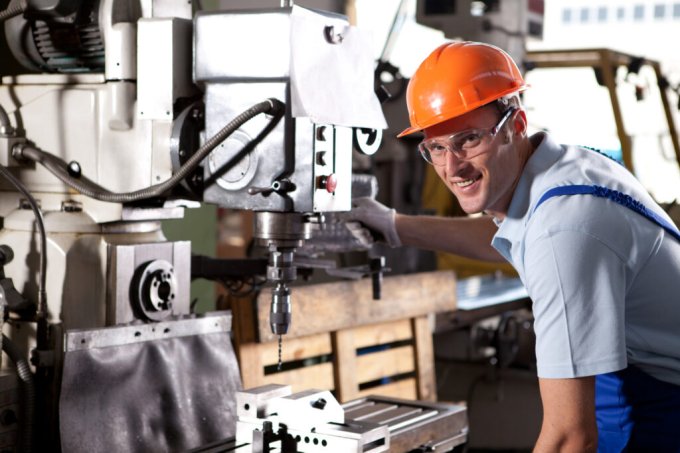
Modern presses, both mechanical and hydraulic, play a key role in metal forming. Combined with automation using industrial robots, it is possible to significantly increase production efficiency. Industrial robots can perform complex operations quickly and precisely, leading to lower labor costs and higher product quality.
The metal forming sector in Poland continues to grow, attracting both domestic and foreign investment. Poland has become an important center of metal production in Central and Eastern Europe, with numerous plants specializing in various metal forming technologies.
Investments in modern technologies and the training of skilled workers are contributing to the competitiveness of Polish companies in international markets.
Metal forming generates a significant number of jobs in Poland. Metalworking companies are looking for qualified specialists such as machine operators, engineers, technologists or quality control specialists.
The future of the metal forming sector in Poland looks promising. The dynamic development of new technologies, such as 3D metal printing, and the growing demand for high-quality products create many opportunities for companies in this industry.
Accuracy and quality control are key factors affecting the quality of products obtained through metal forming. Lack of precision or poor process management can lead to defects and material losses. Therefore, companies must invest in modern quality control systems and employee training to ensure the highest quality products.
Modern quality control methods, such as X-ray, ultrasound, and visual systems based on artificial intelligence (AI), allow early detection of defects and quick response to problems. This allows companies to minimize losses and provide customers with products of the highest quality.
One of the latest innovations in metal forming is 3D metal printing, also known as laser sintering of metallic powders. This technology makes it possible to create complex shapes and structures that are often impossible to achieve using traditional metal forming methods. 3D metal printing is particularly used in the aerospace, automotive and medical industries, where high precision and strength are required.
The future of metal forming is inextricably linked to the concept of Industry 4.0, or the fourth industrial revolution. Intelligent manufacturing systems, based on IoT (Internet of Things) technology, cyber-physical systems and data analytics, enable the automation and optimization of manufacturing processes. This makes it possible to increase efficiency, reduce costs and improve the quality of manufactured products.
Sustainability and environmental care are becoming increasingly important aspects in metal forming. Companies need to invest in technologies that reduce energy consumption, reduce CO2 emissions and effectively manage waste. Examples include metal recycling and the use of renewable energy in production processes.
A key element in the development of the metal forming sector is investing in the education and professional development of employees. Training in new technologies, occupational safety and quality management is essential for maintaining competitiveness in the market. In Poland, many universities and research institutes offer specialized educational programs that benefit both students and company employees.
Cooperation between companies and universities and research centers is an important aspect of development and innovation in metal forming. Joint research projects and knowledge transfer between science and industry make it possible to introduce innovative technological solutions and increase the competitiveness of companies in the international market.
Metal forming is an advanced and versatile field that has a significant impact on various industrial sectors. Understanding what metal forming is all about is key to the further development of this industry and its adaptation to market requirements. Investing in cutting-edge technologies, training human resources, developing innovations and striving for sustainable development are key factors that will shape the future of this sector in Poland and around the world.