
Metalworking is an art that has evolved over the centuries, allowing us to create the tools, machines and structures that shape the modern world. Understanding basic metalworking techniques is crucial not only for those working in the industry, but also for hobbyists and do-it-yourselfers who want to do metal projects on their own. In our article, we will examine a variety of metalworking methods, focusing on practical and technical knowledge.
Hand metalworking is often the first step in learning how to machine metal. With hand techniques, we can accurately detail and customize designs to our individual needs.
Sawing is a process in which we manually remove excess metal, shaping the material into the desired shape. Sawing metal usually involves the use of a metal saw, which consists of a handle and a special blade. The blade is equipped with fine teeth that, making reciprocating motions, cut the metal.
Sawing techniques:
Choosing the right blade: Saw blades have different numbers of teeth per inch (TPI). The higher the TPI number, the finer the cut. For cutting harder metals, such as steel, use blades with a higher TPI number.
Correct stance and grip: A stable stance and a firm grip on the tool are key to precision cutting.
Cutting control: To achieve a straight cut, maintain a constant angle and pressure on the blade.
File filing is a precision technique used for detailing and smoothing surfaces after prior sawing. Metal files come in a variety of shapes, from flat and round to triangular and square, making it possible to work on hard-to-reach areas.
File techniques:
File selection: Files vary in gradation, from coarse (faster removal of large amounts of material) to fine (for finishing).
Mounting the file: When clamping the file to the workpiece, it is recommended to use a vise to stabilize the workpiece.
Movement technique: Hold the file at a suitable angle and use reciprocating motions, applying even pressure along the entire length of the file.
For larger projects and the need for greater precision, manual metalworking techniques often prove insufficient. That's when machines come to the rescue, allowing work to be done quickly and accurately.
Turning is the process of machining rotating surfaces using a lathe. Lathes are widely used in industry to produce cylindrical parts such as shafts and bushings.
Turning basics:
Material clamping: The workpiece material is clamped in the lathe chuck and rotated at high speed.
Cutting tool: The tool is fixed in the lathe's vise and moved along the workpiece.
Precision settings: Setting up the lathe requires precision; both the speed of rotation, depth of cut and tool travel must be precisely matched to the workpiece.
Milling is done with a milling machine that rotates cutting tools with complex shapes. Milling machines allow complex surfaces and shapes to be made on metal parts.
Milling basics:
Welding is one of the most important techniques in metalworking, which involves joining two parts together using heat and/or pressure. How do you machine metal by welding to achieve durable joints? This question often arises among professionals and hobbyists.
Arc welding is one of the most commonly used methods of joining metals, using an electric arc to melt the base materials and filler metal, creating a permanent joint.
Arc welding techniques:
Welder setup: There are many types of arc welders, including MIG (gas shielded welding) and TIG (argon shielded welding), which have different setups and requirements.
Welding technique: Proper guidance of the welding arc is key. You need to maintain the proper distance between the electrode and the material, and control the speed of the arc travel. 3.Safety: Never forget proper personal protective equipment - the use of masks, gloves and protective clothing is necessary to ensure safety during welding.
Gas welding, also known as autogen, is a method of joining metals that uses gas torches to melt the material. It is an older technique, but still very common and highly regarded in many industries.
Gas welding techniques:
Gas mixing: Gas welding uses a mixture of gases, most commonly acetylene and oxygen, to create a high-temperature welding flame.
Flame guidance technique: Controlling the flame and its temperature are important to ensure a solid joint without overheating the material.
Personal protection: Gas welding, like other welding methods, requires protection of the eyes, hands and entire body from sparks and heat.
Surface treatment is the final step in many metalworking processes, providing the appropriate functional and aesthetic properties. These techniques can affect strength, hardness and corrosion resistance.
Metal grinding is the process of removing small layers of material, smoothing and polishing the surface. Special tools and grinding machines are used for this.
Grinding techniques:
Abrasive selection: Different abrasives, such as discs or sandpaper, have different abrasive properties.
Tool guidance: Guide the sander evenly over the metal surface to avoid irregularities and achieve a smooth surface.
Work safety: Grinding generates a lot of dust and sparks, so the use of appropriate goggles and protective masks is essential.
Electroplating is an electrochemical process of coating metal to protect against corrosion and improve aesthetics. The process involves immersing the workpiece in electrolysis containing the metal with which we want to coat the base material.
Electroplating steps:
Surface preparation: The metal surface must be clean and degreased to ensure good adhesion of the coating.
Electrolytic process: The metal object is immersed in an electrolyte bath, and the electric current flowing through the solution causes the metal to be deposited on the surface.
Finishing and inspection: After electroplating, the items are washed and dried. The quality of the coating is inspected to ensure that it is even and free of defects.
Metal cutting is one of the basic metalworking techniques, often used at the very beginning of the production process. How do you machine metal to get the right shapes and sizes? We learn about different cutting methods and tools that allow for precise and efficient metal shaping.
Plasma cutting is a modern method that uses a plasma arc to melt and remove metal from the cutting area. It is a fast and accurate technique used to cut various types of metals, such as steel, aluminum and copper.
Plasma cutting techniques:
Setting up the machine: Plasma cutting requires a plasma cutter and a compressor to deliver a stream of compressed air.
Arc guiding technique: Proper plasma arc guidance, maintaining the correct distance and cutting speed affect the quality of work.
Cutting safety: Plasma cutting generates a lot of heat and sparks, so it is necessary to use protective masks and heat-resistant clothing.
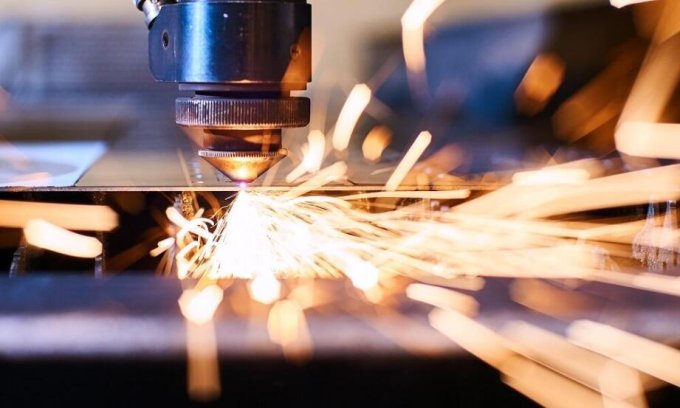
Laser cutting is a precision machining method that involves directing a concentrated laser beam at a metal, causing it to melt and vaporize. How do you machine metal using a laser? It is one of the most modern and precise techniques for cutting complex shapes.
Laser cutting techniques:
Laser settings: CNC lasers require precise parameter settings, such as laser power, cutting speed and type of auxiliary gas.
Quality control: Laser cutting requires monitoring of cut quality to ensure smooth edges and accurate part dimensions.
Workplace safety: Lasers can be hazardous to the eyes and skin, so using proper shielding and eye protection is key.
Metalworking is a field that encompasses a wide range of techniques and methods, each unique and with its own specific applications. Manual techniques, such as sawing and filing, offer precise options for adjusting and shaping metal. Machining, such as turning and milling, allows the material to be quickly and accurately reworked into the required shapes. Welding, whether arc or gas welding, allows metal parts to be permanently joined, while surface treatment processes such as grinding and plating finish the job, imparting the proper functional and aesthetic properties. However, all of these techniques require knowledge, skill and the use of appropriate personal protective equipment to ensure safe and effective metalworking.
Are you interested in metalworking? We invite you to explore this fascinating subject in more depth and experiment with different techniques. With the right knowledge and practice, you can create extremely durable and beautiful metal parts that will last for years.